

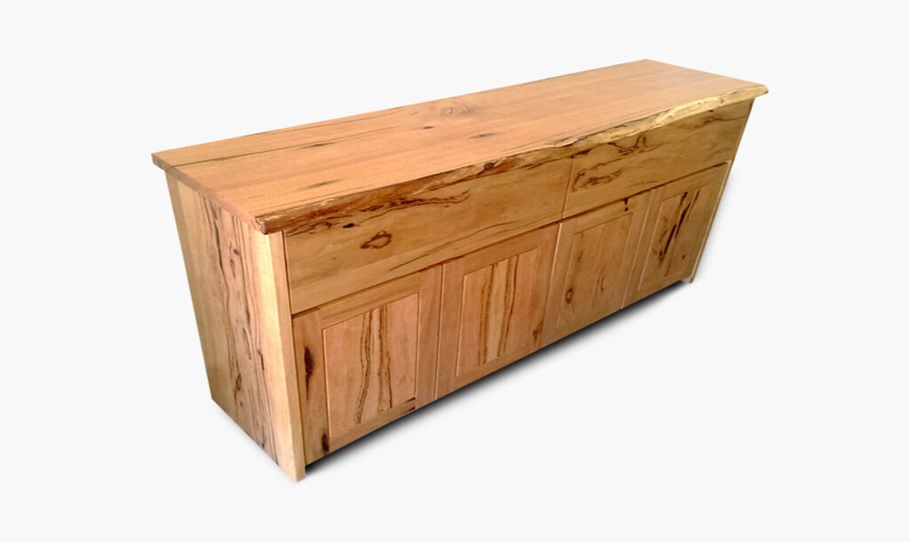
Not all great Australian timber furniture makes its presence known loudly. Sometimes the best pieces are the ones that settle quietly into a space and make everything around them look better — furniture that complements rather than competes, that works across styles and palettes without ever looking out of place. That’s the quiet strength of Tasmanian oak furniture.
Despite its name, Tasmanian oak isn’t a single species — it’s a collective term for three related eucalyptus species found in Tasmania and Victoria’s alpine forests. What they share is a consistent, fine grain, a pale honey-to-cream colour palette, and a versatility that makes them among the most widely used hardwoods in Australian furniture making. This article covers what makes Tasmanian oak worth considering, the pieces it suits best, and how to care for it over the long term.
Understanding Tasmanian Oak as a Timber
The three species grouped under the Tasmanian oak label — Eucalyptus regnans (mountain ash), E. delegatensis (alpine ash), and E. obliqua (messmate) — are among the tallest flowering plants on Earth. Mountain ash in particular can reach heights over 90 metres, and the large, straight logs this growth produces are ideal for furniture making: consistent grain, minimal knotting, and excellent cutting yield.
The resulting timber is medium-density — around 680 kilograms per cubic metre — which makes it lighter to work with and less visually heavy than darker WA species like jarrah or marri. It machines cleanly, accepts both oil and lacquer finishes with equal success, and takes stains well for those wanting to shift the natural colour toward something warmer or darker.
The colour range is typically pale cream to honey with occasional pink or grey undertones. It brightens rather than deepens with light exposure, which makes it well-suited to rooms where the goal is to keep the space feeling open and airy. For homeowners seeking quality timber furniture that won’t make a smaller room feel heavier, Tasmanian oak is often the right answer.
Where Tasmanian Oak Excels in the Home
Tasmanian Oak Dining Tables
A Tasmanian oak dining table suits a wide range of interior directions — from Scandi-influenced minimal spaces to warmer, eclectic rooms where the lighter timber provides visual balance against bolder textiles or wall colours. The consistent grain and pale tones give it a clean, contemporary quality that darker timbers don’t quite achieve.
In terms of practical performance, Tasmanian oak dining tables handle daily use well. The medium density means they won’t dent as easily as the softest hardwoods, though they benefit from regular oiling to maintain moisture resistance. A good oil finish applied annually keeps the surface performing and looking well for decades.
Tasmanian Oak Dining Chairs
Timber dining chairs are a lifetime investment — or they should be. Well-crafted Tasmanian oak dining chairs are built with the structural integrity that sustained daily use demands: solid joinery, careful grain selection to avoid weak cross-grain runs in structural members, and proportions that balance comfort with visual lightness.
Tasmanian oak chairs pair naturally with a matching table but also work as a contrast element — for example, combining Tasmanian oak chairs with a darker jarrah table creates a two-tone effect that reads as deliberately designed. The lighter wood lifts the visual weight of the setting and gives the eye somewhere to rest.
Tasmanian Oak Buffets
A Tasmanian oak buffet provides the same practical storage and display function as any sideboard, but in a timber that feels lighter and more contemporary than the traditional options. In open-plan living and dining spaces — the dominant layout in new Australian builds — a pale Tasmanian oak buffet anchors the dining zone without visually separating it from the rest of the room.
Look for pieces with solid timber drawer fronts and door panels rather than veneered MDF — the longevity difference is significant, and the way solid timber responds to use and care over decades is simply not replicable with engineered alternatives.
Tasmanian Oak TV and Entertainment Units
The entertainment unit is a piece that gets overlooked in many home design decisions — treated as purely functional, chosen for size and price rather than quality and character. A Tasmanian oak TV unit reframes that decision. In a living room where the television dominates one wall, the furniture beneath and around it has an outsized visual effect. A well-proportioned solid timber unit grounds the room and softens the screen’s visual presence.
Tasmanian oak is particularly well-suited to TV units because its lighter colour doesn’t create an oppressive visual mass in living rooms, even in larger pieces with significant storage.
Styling Tasmanian Oak in Your Home
The pale, consistent character of Tasmanian oak gives it genuine versatility — it works across more interior styles than most timbers.
In contemporary spaces with white walls, concrete floors, and minimal accessories, Tasmanian oak furniture adds warmth without competing with the overall direction. Paired with natural linen, terracotta accents, and indoor plants, it creates an earthy-modern aesthetic that feels genuinely current.
In more traditional or coastal interiors, Tasmanian oak sits comfortably alongside rattan, woven textiles, and lighter palette choices. It has a softness that darker timbers lack, making it particularly well-matched to bedrooms and living rooms where the goal is comfort rather than drama.
Care and Maintenance
Tasmanian oak furniture is straightforward to maintain with basic care.
- Oil annually with a quality penetrating timber oil — the lighter colour of Tasmanian oak responds beautifully to oiling, developing a subtle warmth over time.
- Clean regularly with a lightly damp cloth; avoid soaking the surface.
- Use felt pads under objects placed on Tasmanian oak surfaces — the medium density makes it more susceptible to surface marks than the harder WA species.
- Keep out of direct, sustained sunlight where possible to avoid uneven brightening of the surface.
- Sand back any significant scratches with fine-grit paper and re-oil — spot repairs are straightforward and invisible on well-oiled surfaces.
Conclusion
Tasmanian oak furniture occupies a distinct position in the Australian timber furniture market — lighter and more contemporary in feel than the darker WA hardwoods, but with all the durability and character advantages of solid timber over engineered alternatives.
For homeowners who want natural material quality without the visual weight of darker timbers, or who are working with contemporary interiors where balance and restraint are the goals, Tasmanian oak delivers consistently. Whether it’s a dining table, a set of chairs, a buffet, or an entertainment unit, pieces crafted from this beautiful native hardwood are worth the investment — and will look better for it for decades to come.