

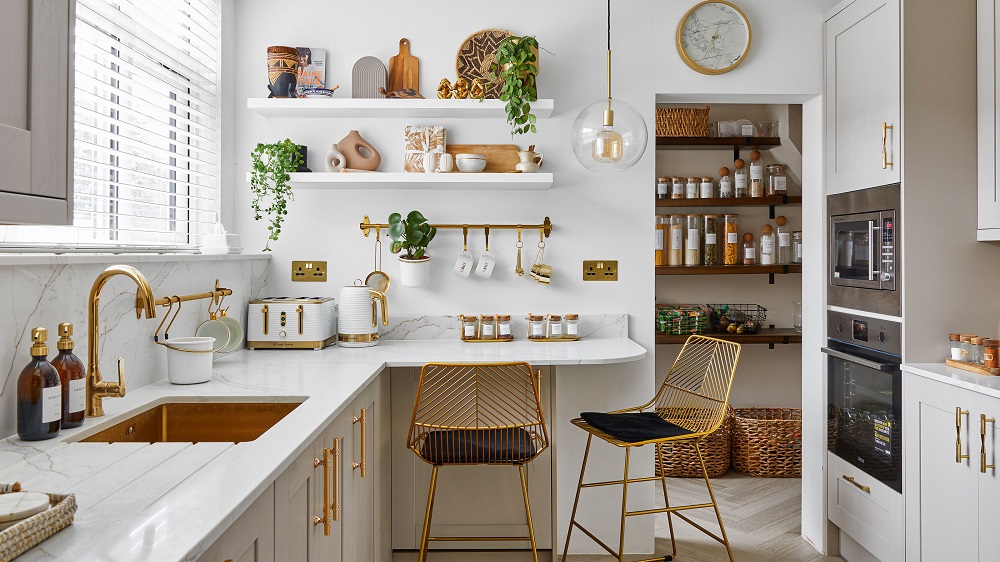
An organized kitchen saves time, reduces stress, and makes everyday cooking more efficient. Smart storage solutions can transform even a compact space into a functional and welcoming environment. The strategies below focus on maximizing space, improving visibility, and making frequently used items easier to reach.
Use Vertical Space to Its Full Potential
Most kitchens have unused vertical surfaces that can become valuable storage zones.
Effective vertical storage ideas include
- Installing open wall shelves for everyday essentials
- Using pegboards for hanging utensils and tools
- Adding tall narrow cabinets for dry goods
- Mounting hooks under shelves for mugs or ladles
Vertical storage keeps items visible and accessible without crowding countertops.
Organize Drawers with Smart Dividers
Drawers often become clutter hotspots when items are stacked randomly. Dividers create structure and prevent unnecessary searching.
Best uses for drawer organizers
- Separate cutlery and cooking tools
- Arrange spice jars horizontally for quick reading
- Store lids vertically instead of stacking them
- Keep baking tools grouped together
Well-structured drawers reduce time spent looking for essentials.
Install Pull-Out Storage Solution
Pull-out storage improves access to deep cabinets where items are often forgotten.
Where pull-out systems work best
- Under the sink for cleaning supplies
- Narrow gaps beside appliances
- Pantry cabinets for dry ingredients
- Lower cabinets for pots and pans
Sliding shelves make every inch of storage reachable without bending or rearranging items repeatedly.
Use Transparent Containers for Pantry Items
Transparent containers improve visibility and maintain freshness while creating a uniform appearance.
Advantages of clear storage containers
- Quickly identify ingredients
- Prevent duplicate purchases
- Keep shelves visually tidy
- Allow efficient stacking
Labeling containers further enhances accessibility and reduces confusion.
Add Magnetic Storage to Free Counter Space
Magnetic strips are compact yet powerful storage tools that help keep frequently used items within reach.
Practical magnetic storage uses
- Mount knives safely on magnetic strips
- Store spice jars on magnetic racks
- Attach measuring spoons to metal boards
- Hold lightweight tools near cooking areas
This approach frees drawer space while keeping tools visible and organized.
Group Items by Function Instead of Category
Traditional storage methods often separate items by type rather than usage. Grouping by function improves workflow.
Examples of functional grouping
- Store baking tools together in one zone
- Keep tea and coffee supplies near the kettle
- Place chopping boards near preparation surfaces
- Organize cooking oils near the stove
Functional placement reduces unnecessary movement during meal preparation.
Use Cabinet Doors as Hidden Storage Areas
Cabinet doors offer overlooked storage potential that can hold lightweight essentials.
Smart cabinet door storage ideas
- Attach racks for lids and wraps
- Install hooks for measuring spoons
- Store cleaning cloths inside sink cabinets
- Add slim spice holders to pantry doors
These solutions create extra space without expanding cabinetry.
Rotate Seasonal and Rarely Used Items
Not every kitchen item needs to remain within daily reach. Rotating storage keeps essentials accessible while reducing clutter.
Items suitable for rotation
- Large serving dishes
- Holiday cookware
- Specialty appliances
- Extra storage containers
Store these items in upper cabinets or separate storage areas to keep prime kitchen space efficient.
Maintain a Simple Decluttering Routine
Storage systems remain effective only when maintained regularly.
Practical habits to sustain organization
- Remove duplicate utensils
- Check pantry expiration dates monthly
- Return items to assigned zones
- Limit countertop appliances to daily essentials
Consistency prevents clutter from returning over time.
FAQ Section
How often should a kitchen be reorganized for best efficiency
A light reorganization every three months helps maintain accessibility and ensures unused items do not accumulate.
What is the best way to store small kitchen appliances
Store frequently used appliances on accessible shelves and place occasional-use appliances in higher cabinets or storage zones.
Are open shelves better than closed cabinets for organization
Open shelves improve visibility and accessibility but require consistent maintenance to remain tidy.
How can small kitchens create extra storage without renovation
Using vertical shelving, cabinet door organizers, magnetic strips, and stackable containers significantly increases usable storage space.
What type of containers keep pantry items fresh the longest
Airtight containers with secure seals preserve freshness and protect ingredients from moisture and pests.
How can families maintain shared kitchen organization systems
Labeling shelves and containers helps all household members return items to their correct locations.
What is the easiest first step to reduce kitchen clutter quickly
Removing duplicate utensils and expired pantry items creates immediate space and improves accessibility.