

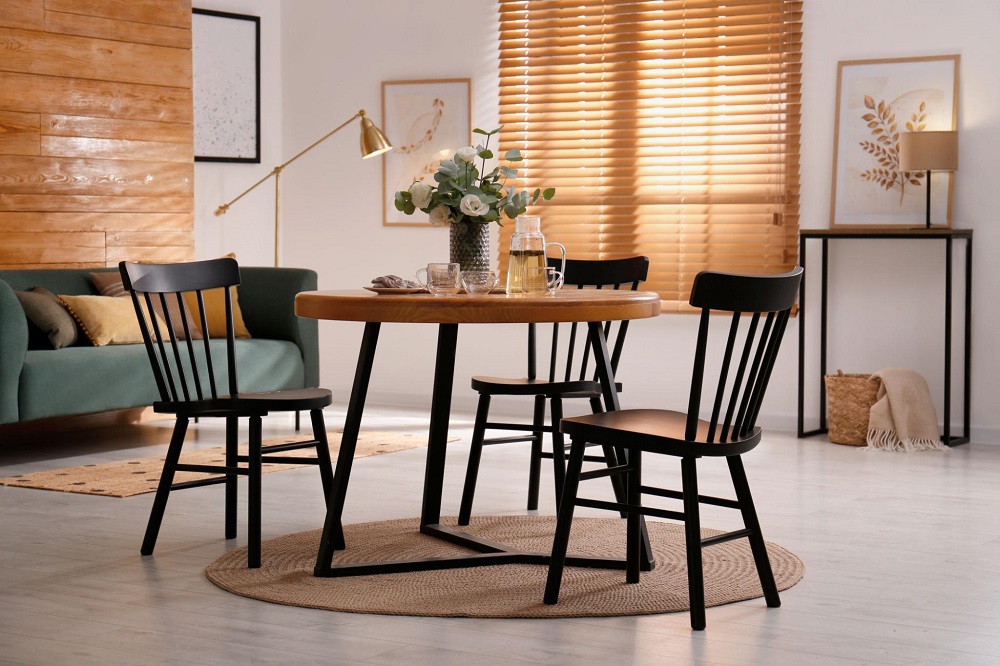
Designing a comfortable dining space in a limited footprint is less about square footage and more about thoughtful planning. With the right layout decisions, lighting strategies, furniture choices, and storage solutions, even a compact dining corner can feel welcoming, functional, and visually balanced. The ideas below focus on practical adjustments that enhance usability while maintaining a warm atmosphere.
Choose Space-Saving Furniture That Feels Light
Furniture selection determines how comfortable a small dining area feels during daily use. Pieces that visually occupy less space help the room appear open and uncluttered.
Consider these effective options:
- Round dining tables to improve movement flow around tight corners
- Drop-leaf tables that expand only when needed
- Wall-mounted folding tables for multipurpose areas
- Bench seating that slides neatly beneath tables
- Slim-profile chairs with open backs for visual lightness
Furniture with exposed legs instead of bulky bases also allows the eye to travel across the floor, making the area feel larger.
Improve Layout Flow for Easy Movement
Comfort is closely tied to how easily people can move through the dining space. A well-planned layout prevents the area from feeling cramped.
Try these layout adjustments:
- Position seating along a wall where possible
- Keep at least one side open for entry
- Align the table parallel to walls instead of diagonally
- Avoid blocking natural walking paths between rooms
If your dining area sits within a living room or kitchen, arranging furniture in zones helps define purpose without adding barriers.
Use Light Colors to Expand Visual Space
Color influences how spacious a room feels. Light tones reflect natural light and create an open atmosphere.
Recommended color choices include:
- Soft whites
- Warm beige tones
- Light grey finishes
- Gentle pastel accents
Instead of dark bulky furniture, select lighter finishes or natural wood textures to maintain visual continuity.
Add Smart Storage Without Overcrowding
Storage is essential in compact dining areas but must remain discreet. Built-in or vertical solutions maintain order without sacrificing space.
Useful storage ideas:
- Floating shelves above eye level
- Narrow wall cabinets
- Corner shelving units
- Storage benches
- Slim sideboards with shallow depth
Keeping table surfaces clear improves both comfort and appearance.
Improve Lighting for Warmth and Functionality
Lighting transforms the dining experience. A small area benefits from layered illumination rather than relying on a single ceiling fixture.
Combine the following:
- A centered pendant light above the table
- Wall sconces for soft ambient glow
- Under-shelf lighting for subtle brightness
- Warm color temperature bulbs for comfort
Position lighting directly above the dining surface to create a defined visual zone.
Use Mirrors to Create a Sense of Depth
Mirrors reflect both light and surrounding space, making compact areas appear larger than they are.
Effective mirror placement includes:
- Opposite windows to reflect daylight
- Behind dining benches
- Along narrow walls beside tables
A single medium-sized mirror often works better than multiple smaller pieces in tight areas.
Add Comfortable Textures Without Clutter
Comfort is not only visual. Materials influence how inviting the dining area feels during everyday meals.
Consider incorporating:
- Upholstered seat cushions
- A compact area rug beneath the table
- Linen or cotton table runners
- Soft curtain fabrics nearby
Choose textures that are easy to clean and proportionate to the room size.
Define the Dining Area With Subtle Visual Boundaries
Even in open layouts, a dining corner should feel intentional rather than temporary.
Ways to define the space include:
- Hanging a pendant light directly above the table
- Placing a small rug underneath seating
- Using wall art aligned with table width
- Painting a feature wall behind the dining zone
These simple cues establish identity without occupying extra floor space.
Choose Multi-Purpose Furniture for Everyday Flexibility
Compact homes benefit greatly from adaptable furniture pieces.
Smart multi-use solutions include:
- Extendable dining tables for guests
- Benches with hidden storage
- Foldable chairs stored on hooks
- Console tables that convert into dining surfaces
Flexibility ensures the dining area remains useful throughout the day.
Keep Table Styling Minimal but Inviting
A crowded tabletop reduces usability. Simple styling improves both comfort and practicality.
Ideal styling elements:
- One centerpiece such as a small plant
- A narrow runner instead of a full tablecloth
- Compact salt and condiment holders
- Lightweight placemats
Balanced styling keeps the space functional while maintaining warmth.
FAQ Section
How can I make a very small dining area feel more spacious?
Use light colors, slim furniture, mirrors, and vertical storage solutions. Keeping walkways clear also improves perceived space.
What type of dining table works best in compact homes?
Round tables and drop-leaf tables are often the most efficient because they allow flexible movement and adjustable seating capacity.
Can rugs be used under dining tables in small areas?
Yes. A properly sized rug helps define the dining zone and improves comfort without making the space feel crowded.
What lighting works best for a small dining corner?
A centered pendant light combined with soft ambient lighting creates both functionality and warmth.
How do I add storage without making the area feel cramped?
Choose wall-mounted shelves, narrow cabinets, and storage benches instead of bulky floor units.
Should dining chairs match the table in small spaces?
Matching furniture creates visual continuity, but mixing slim-profile chairs with a compact table can add character without clutter.
How can I separate a dining area inside an open-plan room?
Use rugs, lighting placement, wall art alignment, or a feature wall color to visually define the dining space without installing partitions.